


















BetLabel Canada: A Sportsbook Built for a Six-Time-Zone Country
Puck drops at seven — in three different zones
It's a Saturday in January and the country is doing the thing it does better than anywhere else on earth: watching hockey, all of it, all at once. The Leafs are on in Toronto, the Canadiens forty minutes into the second period in Montréal, the Flames warming up two time zones west while it's still afternoon light in Calgary, and the Canucks won't drop the puck for another three hours on the coast. One league, one night, strung across four and a half hours of clock. On the board in front of me a Jets game is ticking over live, an NBA fixture is about to tip in the States, an English soccer match kicked off before most of the country was awake, and a curling draw from a Grand Slam event is running quietly in its own corner with a full set of markets behind it. None of it is filler. Every line carries real betting — moneyline, puck line, totals, first to score — with a little counter at the end offering a few hundred more if you go looking.
That is the character of the place, and saying it plainly up front saves a lot of explaining later. Canada is a country that does not agree with itself about what time it is. When the Senators are done in Ottawa the night is only getting started in Vancouver, and a fan on the Atlantic clock in St. John's is half an hour off from everyone. A book that runs around the clock and never shuts the counter suits that shape almost too well. If you follow one team in one league and glance at a score after dinner, you'll find BetLabel generous to the point of being overwhelming. If your interest in sport runs more like a constant background signal — a game on somewhere, a tab open, a fantasy roster you have opinions about — it fits like it was cut to measure.
The whole operation runs under a Curaçao Gaming Control Board licence, which is a cross-border framework rather than one tied to a single country. What that means for you in practice is short: the rules that actually bind are whichever ones apply in the province you're logging in from, seeing an offer on your screen doesn't guarantee it's one you're cleared to take, and sorting out where you stand is a few minutes of homework that falls to you and no one else. Nineteen in most of the country, eighteen in Alberta, Manitoba and Québec — and the local regulator has the final word wherever you are.
The short version, before you scroll

For anyone who'd rather not wade through a few thousand words to work out whether this place is for them. BetLabel lists the leagues you actually follow plus a stack you've never heard of. Hockey gets the full treatment top to bottom, the Blue Jays and Raptors are priced like the national institutions they are, the CFL is a real sport here rather than a courtesy tab, and there's genuine curling and junior-hockey depth most books can't be bothered with. The cash-out tools are solid and the autosale beats most. The cashback lands every Tuesday with nothing riding on it. The screen is busy, and that busyness is the deal you're signing up for. What follows is me unpacking why each of those lines reads the way it does.
| Feature | What BetLabel offers |
|---|---|
| Sports covered | Hockey, football (CFL and NFL), basketball, baseball, soccer, tennis, curling, plus a long tail beyond — down to darts, snooker, table tennis, beach volleyball and lacrosse |
| Markets on a big event | Deep. A headline Leafs, Oilers or Blue Jays fixture opens into hundreds of extra lines beyond the ones on the main row |
| Esports | A dedicated hub across nine disciplines, split into Real, Virtual and Cyber, with map and round-level markets |
| Bet types | Single, multi, system, plus chain and Toto formats |
| Common markets | Moneyline, puck/run/point spread, totals, individual totals, first scorer, plus event and player props on the majors |
| Odds display | Decimal by default, switchable to American in account settings |
| Live betting | In-play odds, running clock, live score and match data, with a simulated visual feed on a large share of events |
| Cash-out | Full or partial sale of a running bet, plus an autosale that triggers at a value you choose |
| Sports welcome | A 100% match on your first deposit, or a free bet worth a share of it — one or the other |
| Weekly cashback | 3% of the total stake of your losing bets, credited every Tuesday, no wagering attached |
| Multi insurance | Stake refunded on a seven-leg or longer multi if exactly one selection lets you down |
| Currency | Canadian dollars shown throughout, with a wide range of other currencies and crypto supported |
| Mobile | The full sportsbook on the app and the mobile site, with a monthly bonus for betting from the app |
One country, six time zones, and a board that fits all of them
There's a particular way a Canadian sports fan has always lived, and it's worth naming because it's exactly the thing this book is built around. The game you most want to bet — a West Coast fan chasing an Eastern Conference night game, a Maritimer whose Champions League fixture kicks off before lunch, the late NBA game on the far side of the continent — keeps landing at an hour that doesn't quite line up with your own. And for most of this country's betting history there was a hard stop built into the whole thing. You bought a PROLINE slip at the corner store, you picked your minimum number of games because a single bet wasn't even allowed, and that was your lot until you walked back in. A board that never closes changes the shape of that entirely. Whatever's caught your eye this week is sitting there with a price at two in the morning if that's when you happen to be awake to look at it.
That's the appeal and the warning in the same breath, and I'll come back to the warning near the end. For now, take it as the reason the sheer size of this thing isn't the accident it looks like on day one. It reads as clutter at first. By the second week it reads as the only board wide enough to have something live whenever your own hours happen to fall — which, in a country this physically spread out, is a genuinely useful trait rather than a marketing line.
The single-game era, and why the slip looks different now
Worth a short detour here, because it's specific to this country and it changed how Canadians bet more than anything else in a generation. Until August 2021, betting a single game on its own was illegal nationwide — the old provincial products forced you to parlay two or more outcomes together whether you wanted to or not, which is why a couple of generations of Canadian bettors grew up thinking a "bet" meant a slip of three games you were three-quarters sure would bust. When the law changed, single-event wagering arrived, the provinces rolled out their own regulated books, and the whole texture of a bet slip shifted overnight.
The reason it matters on a page like this is that BetLabel's slip assumes the new world completely. Want a straight moneyline on the Oilers and nothing else? That's a legal, ordinary, one-line bet now, and the board treats it as the default rather than the exception. The multi is still here, still woven through most of the promotions, and still where a Saturday-night hockey card gets its fun — but it's a choice you make, not a floor you're forced onto. If you cut your teeth on the parlay-only era, that freedom takes a little getting used to. If you're newer to it, you'll never know it was ever any other way.
Everything is on the board, and that's the point

Here's the number that made me stop scrolling. On a dead-quiet Wednesday, the table tennis tab was holding close to six hundred fixtures — roughly three times what tennis, the sport right above it, was carrying that same afternoon.
That isn't a glitch and it isn't padding. Table tennis is played in some competition, in some time zone, at more or less every hour of the day, so pricing it seriously means the book always has something live on it — and for a country strung across six time zones where somebody is always awake, "always something live" is the whole pitch. The same logic sprawls down the sidebar: futsal, water polo, snooker, cycling, lacrosse, beach volleyball, darts, and plenty stranger than that. Switch to the live tab and it multiplies again — a fighting-game bracket sitting incongruously next to a stack of overnight fixtures from the other side of the planet.
You're not going to plan your Saturday around water polo, and nobody at BetLabel thinks you will. The point of listing it is a policy, not a prediction: once a market goes up it doesn't come down, and the reward for that policy is that whatever grabbed your attention this week — however niche — already has a price and a stack of sub-markets waiting when you go looking.
But the exotic stuff is a sideshow. The real question is whether the ordinary sports hold up in the divisions the big books can't be bothered with, so that's what I stress-tested — minor leagues, mid-week cup ties, the qualifiers that usually get one lonely moneyline and nothing behind them. A second-tier European soccer fixture kicking off at breakfast here had full lines and totals. A junior hockey game running live on a weeknight had a live board with real markets on it. That's the tell. The width isn't decoration; it goes all the way down.
Hockey, the Blue Jays, the Raptors and the codes BetLabel takes seriously
Hockey leads, as it has to on any board built for this country, and pretending otherwise would be daft. The NHL carries the full treatment across all seven Canadian clubs and the twenty-five American ones: moneyline, puck line, total goals, winning-margin buckets, and on the bigger games the first goalscorer, anytime-scorer and period-by-period markets underneath. Depth is genuinely deep — a regular-season Leafs game I opened had a counter showing well over a thousand extra lines behind the visible row, which is the sort of number you'd expect on a Game 7 rather than a Tuesday nighter in November. Playoff hockey pushes it further still, and the trade-deadline and draft build-up carry their own markets for anyone who follows the sport in the off-ice months too.
Baseball gets treated as its own real sport rather than a seasonal afterthought, and here Canada has a specific stake in it. The Blue Jays — the only Major League club north of the border, and a team the entire country adopts every summer — run the full MLB board: moneyline, run line, totals, first-to-score, strikeout and player-prop markets, with the depth you'd want on the one club Canadians actually own rather than the thin pricing a book aimed elsewhere would hang on them. The rest of the American League and National League is priced through, the postseason build-up carries full boards, and the World Series draws the kind of coverage that pulls in people who watch three games a year.
Basketball is much the same story, and the Raptors carry it. As the lone NBA franchise in the country — and the one that won the whole thing in 2019, a run half the nation remembers where they were for — Toronto pulls fuller boards than the raw market size would suggest a book should bother with. Quarter and half markets, handicaps and a deep bench of player props run across the Raptors and the rest of the NBA, and the scoreboard never stops moving, which makes it one of the better in-play sports on the platform.

The CFL gets more care here than most generalist books bother with, and it earns it in a country that treats three-down football as its own institution rather than a knock-off of the American game. The full Grey Cup chase is priced week by week — game moneyline, spread, total points, first touchdown, player yardage props — and the rivalries that mean nothing to an outsider and everything to a fan get real boards. The NFL sits right alongside it, priced in full, because plenty of Canadians follow both codes without seeing any contradiction in it: Sunday for the NFL, a Thursday or Friday night for the CFL, and a book that carries both the way this one does is cut for exactly that habit.
Curling is the one I'd point to as proof the width is real, because it's the sport a book built somewhere else would ignore entirely. The Brier and the Scotties are priced through, the Grand Slam of Curling events carry event and match markets, and the mixed doubles and Olympic qualifying pull fuller boards when they land. It's not a deep pool by soccer standards, but its being priced at all — and priced properly, draw by draw — tells you more about how seriously this book takes a Canadian audience than another thousand soccer lines would. Junior hockey is the second proof: the CHL and its three leagues — the OHL, the WHL and the QMJHL — are priced through the season, and the Memorial Cup pulls real depth, which is not something you find on a book that thinks Canada begins and ends with the Leafs.
Soccer sits underneath all that, deeper than you'd expect — the major European leagues carry hundreds of lines apiece, the Canadian Premier League and the three MLS sides (Toronto FC, the Vancouver Whitecaps and CF Montréal) are priced through their seasons, and the men's and women's national teams pull full boards on international weeks, with real interest now the men have a home World Cup on the near horizon. Then the motorsport and the racing, which change shape entirely: a Grand Prix weekend or a big card at the track is priced runner by runner, each name carrying its own price. It's a different kind of betting from picking a winner between two sides, and it's worth knowing it's there before you go hunting a head-to-head that doesn't exist.
| Sport | Typical market depth | Live betting |
|---|---|---|
| Hockey (NHL) | Very deep — hundreds of lines on marquee and playoff games | Extensive, across the slate |
| Baseball (Blue Jays & MLB) | Very deep — moneyline, run line, player and prop markets | Strong, inning by inning |
| Basketball (Raptors & NBA) | Quarters, halves, handicaps, player props | Strong and fast-moving |
| Football (CFL & NFL) | Very deep — spread, total, scorer and yardage markets | Extensive on both codes |
| Curling | Event, match and end markets across the majors | Good on the Slam and championship events |
| Junior hockey (CHL) | Priced through the season across all three leagues | Live on the main fixtures |
| Soccer | Hundreds of lines on major fixtures | Extensive, leagues large and small |
| Table tennis | Real markets, and an enormous number of them | Near-continuous |
| Esports | Map, round and objective markets on majors | Live across the main disciplines |
Nine disciplines and three doors: esports at BetLabel
 Download theandroid appDownload theIOS app

If there's one section that lifts this platform out of the pack of interchangeable all-rounder books, it's the esports hub. Wagering on esports is nothing unusual anymore, so that fact alone settles nothing. What sets it apart is that this is a properly built-out operation with its own internal logic, not the token handful of Counter-Strike matches an operator staples on so it can put the word "esports" on a tab.
Get past the marquee titles and it's the breadth that catches you off guard. Counter-Strike 2 and Dota 2 hold it down, League of Legends had the busiest schedule the day I combed through it, and Valorant isn't far off — all of that you'd expect. Then it strays where most Western books won't go: Mobile Legends, Honor of Kings, Overwatch, PUBG, WarCraft III, Crossfire. The first two of those draw enormous crowds across Asia and get almost no room on Western sites, and a viewer out on the Pacific coast can genuinely catch a decent slice of those broadcasts at a sane hour — which turns their presence from a novelty into a real advantage.
The list of tournaments is every bit as serious as the list of games. BLAST Bounty and its qualifier, the European Pro League, the LPL and LCK on the League side, EPL Masters for Dota, the Valorant Champions Tour running through the China and Pacific circuits. The moment a series carries any real weight the markets fan out well past the outright — map winner, map handicap, total maps, round totals and handicaps, and a dedicated frags market on the Dota games. And the prices move with the match as it happens, which is the entire appeal: one round tips a best-of-three and the whole board has redrawn itself before you've finished cursing at the screen.
Real, Virtual and Cyber
The hub splits three ways, and reading the tab you're on is more important than it looks. Real is the actual sport — human players, a fixed tournament calendar, the coverage I've just walked through. Virtual and Cyber are the computer-generated cousins: they run on a loop with no schedule to wait on, the odds tick over as the simulation plays, and there's always one available whatever the hour.
The thing to keep straight is that those last two belong in a different mental box entirely. They're far closer to a virtual-sports slot machine than to a contest you can handicap — fine for idling away a slow hour after every real event has wrapped, wrong for putting a considered opinion behind. The tab tells you plainly which is which. The only way to get caught is to not look, which is exactly what happens when you're tired and clicking fast and the labels stop registering.
Live betting, and what that visual feed actually is
Move over to the in-play tab and the whole thing shifts tempo. The numbers recalculate live, the clock and the score run themselves, and every game wears a little strip of icons — recent form, live stats, a match tracker — that open out when you press them. On one busy evening I counted more than nine hundred fixtures live at the same moment, a solid share of them carrying a moving visual panel alongside the price.
That panel deserves a straight explanation, because it trips people up more than anything else on the platform. It is not a video of the game. It's an animation built out of the live data feed — a clean, moment-by-moment redrawing of where the play is, not footage of the real thing. Counterintuitively that's mostly a plus: it tracks the true state of the match and, unlike a delayed television stream, it doesn't run a few seconds behind the odds — and that lag between picture and price is precisely what burns in-play bettors. Just hold the distinction in your head. If you want to actually watch the game, put it on a second screen and leave this one for the numbers.
And the real strength of the live board was never the animation. It's the sheer coverage. Every filter and sport-by-sport count from the pre-match side carries straight over, and the live list burrows into the same strange corners — if a puck has just dropped or a ball is in the air somewhere on the planet right now, there's a live price sitting on it here.
The slip, the sell button, and the autosale

The slip sits down the right-hand side and stacks up as you tap prices into it. Flip it between single, multi and system and it keeps everything you've already chosen, and it's perfectly happy carrying legs from wholly unconnected games on the one ticket. Tucked below it is a save-and-load tool for your selections — duller-sounding than it is, and a genuine time-saver if you rebuild more or less the same weekend multi every Saturday and would sooner not start from a blank slip each time.
The piece worth getting your head around is the cash-out. BetLabel will buy a live bet back off you before it settles — the whole thing, or just a portion, leaving the rest to run its course. Sitting on top of that is autosale: you set a target figure, and the instant the slip's cash-out value touches it, the platform sells on your behalf without you lifting a finger. That's the tool that quietly earns its keep, because the most maddening way there is to lose a live multi is to be nowhere near your phone at the moment the final leg flips — asleep, behind the wheel, out at dinner — and autosale is built for exactly those gaps.
Two limits, stated honestly. Cash-out is switched on per slip rather than across the board, so some bets can only be sold in full and a handful can't be sold at all — anything that's already settled, a market that's been suspended, or a slip you've cashed out of once before. And the figure on offer shifts as the game does, so linger over the call for a couple of minutes and the number you end up with won't be the one you were looking at. Neither is really a fault, just the mechanics of the thing — and both are far easier to take in here, on this page, than mid-game with the clock ticking down.
Reading the multi, and where it earns its keep
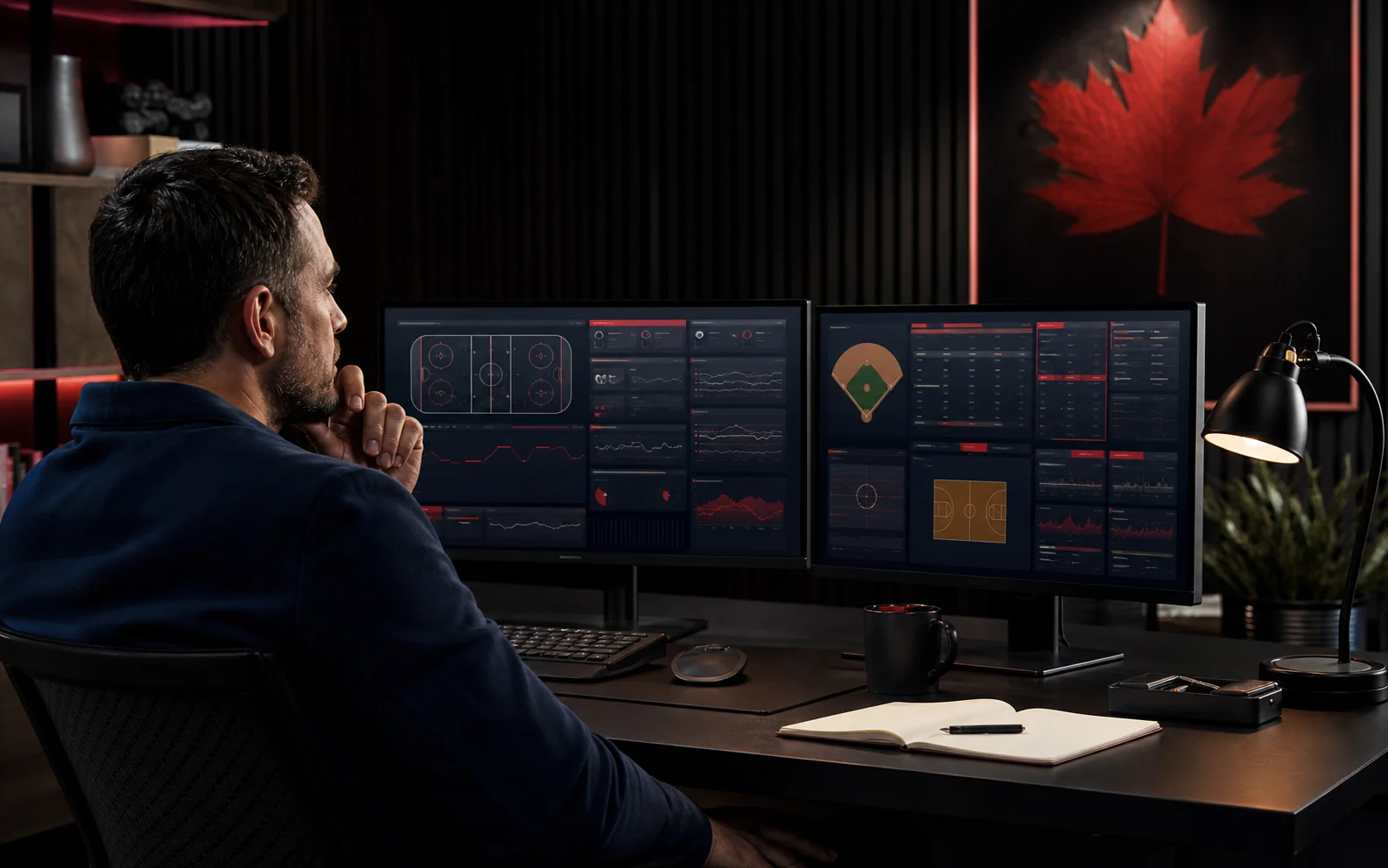
Multis are woven right through the betting culture here — the whole PROLINE generation was raised on them — and most of the bonuses on this site are built around them, so it's worth being clear-eyed about what they are before someone sells you a dream. A multi bundles several legs onto one ticket and multiplies the odds together into a figure that looks fantastic. The multiplication cuts both ways, though: every leg has to come in, and each one you bolt on lifts the potential return and the odds of the whole thing dying in equal measure.
Three shapes cover almost everything, and telling them apart is most of the skill:
- Single — one selection, one outcome, your whole stake riding on it. Low ceiling, low risk, nothing to overthink. It wins or it doesn't — and, as of 2021, it's finally a bet you're allowed to place on its own.
- Multi — several legs on one ticket, the prices compounding into an eye-watering number. All of them have to land. This is the format nearly every promotion is shaped around, so it's the one to get comfortable with first.
- System — a mesh of smaller multis that still pays something even when a leg or two misses. Gentler than a straight multi, but harder to read at a glance, so it rewards a bit of study before you commit real money.
Beyond the three there are chain bets and Toto pools — older-style products parked in their own corner rather than riding the main slip. They run on different enough rules that they deserve a proper read rather than a curious poke.
And one flat piece of honesty no bonus banner will hand you: the ten-leg multi priced like a mortgage payment is, once you actually run the maths, a long shot in a nice suit. There's nothing wrong with the occasional big swing — a Saturday hockey multi is half the fun of the night — but there's plenty wrong with mistaking it for a plan. Keep the serious money on the short slips, keep the moonshots on the long ones, and try hard not to let those two budgets bleed into each other.
Making sense of a price
Most sites tuck this away somewhere nobody will find it, on the assumption that nobody wants it. I'd sooner put it where it does some good, because a price means nothing hanging in the air and snaps into focus the instant you pin it to a game you can actually picture — and it really isn't complicated once someone lays it out without the mystique.
BetLabel shows decimal odds by default, which is the cleanest of the formats to read, though you can flip the whole site to American odds in the settings if that's the language you grew up betting in. Decimal is simply your total return per dollar staked. A price of 2.50 turns a ten-dollar bet into twenty-five: your ten back plus fifteen on top. A price of 1.39 — a solid favourite — turns that same ten into thirteen-ninety, which is what a short price feels like in the hand.
The hinge is 2.00. Below it you're backing the favourite; above it you're on the underdog. That, honestly, is the whole lesson. American odds like +150 and −140 are saying the same thing in a different accent — the plus tells you what a hundred-dollar bet wins, the minus what you'd stake to win a hundred. Once you stop converting in your head and start reading the shape of a price on sight, the arithmetic becomes instinct — and instinct is all you've got when a price is sliding and you've four seconds to call it.
The markets you'll actually use


The main row on a hockey fixture opens with the moneyline — the straight pick of who wins. Beside it sits the puck line, hockey's version of the spread, which hands one side a virtual head start (a goal and a half, most nights) and asks you to back a team to cover it rather than simply win. Then the total, which ignores the winner entirely and asks only whether the goals finish above or below a mark. Individual totals do the same for one side on its own. First goalscorer and anytime-scorer do what the names promise, and on the bigger games a long tail of player props sits underneath.
And that's just the surface. The counter parked at the end of the row is where the rest of it lives — the margin brackets, the period-by-period splits, the milestone markets, and the long run of player props that hand an ordinary Tuesday nighter a reason to keep a second screen open. None of it is homework you owe on day one. Get easy with the moneyline and the total first, and let the rest arrive as your curiosity widens to meet it.
Tuesday money, and the offers that keep paying
The welcome comes down to a choice between two doors: a flat 100% match on your opening deposit, cleared through multis, or a free bet pegged to a slice of that deposit if you'd rather take the swing than bank the balance. Both ask for a finished profile and a verified phone number — a recurring theme here that I'll come back to in a moment.
But the offer I'd actually circle is the Tuesday cashback, for the simple reason that it's still paying out long after the sign-up bonus has faded from memory. Every week the site adds up your losing sports stakes and hands back 3% of the total, dropped into your account automatically on Tuesday — with no wagering to clear on it. That last clause is the whole difference. It shows up as ordinary, withdrawable money, not a locked bonus quietly ticking toward an expiry you'll forget. Qualifying bets have to be priced 1.5 or higher and totals and handicaps are left out of the sum, but as these things go it's about as honest as they come. On a single bet it's spare change. Over a full hockey season it's a quiet discount on the cost of caring about the result.
Two others earn a mention. Multi insurance covers slips of seven legs or more at odds of 1.7 and up — drop exactly one leg and your stake comes back to you. Seven legs is a tall order, and the offer doesn't pretend otherwise (lose two and it's gone), but for anyone in the habit of building long tickets it softens the blow of the leg that dies right at the death. Then there's the losing-streak offer: string together twenty losing bets inside thirty days, at stakes over a set floor and odds no longer than 3, and you're due a bonus scaled to what you'd been staking. The way you claim it is the charming bit — you email support with your account number and "Series of losing bets" in the subject line. No button, no pop-up, no automation anywhere. Someone actually reads it and sorts you out, which in this stretch of the internet feels almost old-fashioned.
Beneath all of that the calendar just keeps turning — a Saturday offer on the sports side, a tiered casino loyalty scheme whose cashback rate climbs as you move up it — and because there's one shared wallet, nothing you win on either side ever ends up stuck on the wrong half of the platform.
The one bit of structure to get right
Bonuses split across two tracks, sports and casino, and you lock into one of them in account settings before any money goes in. It reads like paperwork and it is, but it bites: over on the casino side, changing your bonus type or turning one down midway through the run can forfeit whatever was left of it. So decide which half of the site you genuinely came for, choose once, and don't touch it again.
The second job to do before depositing: crypto and bonuses don't sit together. Bar one deliberate carve-out, every promotion here is switched off for cryptocurrency accounts — and that carve-out is a crypto-only offer built specifically to fill the hole. If any part of your reason for being here is the promotions, fund through another method and save the crypto for cashing out, which is the one job it does better than anything else on the site.
Opening a BetLabel account
 Download theandroid appDownload theIOS app
Sign-up works off a phone number instead of an email address, which is faster than it sounds but comes with one string attached that's worth knowing going in: that number has to be verified before most bonuses will release. This isn't small print you can skim past — it's the live requirement on nearly every offer, all of which name a verified phone and a filled-out profile among their conditions. Giving it ten honest minutes to complete every field is the single highest-return thing you'll do on the whole platform, and it's the thing hardly anyone bothers to do.
Second habit for day one: type your name in exactly as it reads on whichever piece of ID you'll verify with down the line. Not a soul checks it at sign-up. Somebody checks it very closely the first time you try to withdraw, and one stray middle initial is all it takes to turn a same-day payout into a three-day wait.
- Hit Registration in the top right and choose to sign up by phone.
- Enter your number, choose how the confirmation code arrives, and key it in when it does.
- Set your account currency. It's permanent, so give it a beat of thought.
- Add a promo code if you've got one — the field is on the registration form itself, not somewhere later.
- Open My Account and fill every field: full name, date of birth, email, province of residence.
- In Account Settings, opt in to bonuses and choose your track, sports or casino.
Once that's done, placing a first bet takes about as long as it takes to read this. Deposit — cards and instant methods credit on the spot — then work your way down the left sidebar: sport, then league, then the fixture. Tap the price you want and it falls into the slip on the right; punch in a stake, glance at the return, confirm it. Fiddly the first time through, second nature by the fourth.
On a phone
Nothing's been trimmed away for the smaller screen. The whole sportsbook, the live board, the slip and every last cash-out tool run on mobile, and the in-play board especially takes to thumb navigation as though it were drawn up for it — which, given that's where the bulk of live bets get placed, it more or less was.
There's a solid reason to bet from the app rather than the browser, too. BetLabel runs a monthly bonus that counts only the bets you place inside the app: settle twenty qualifying bets over the course of the month and the payout is tied to your average stake, up to a ceiling. It's a smart bit of design, because it moves with how you actually bet instead of dealing everyone the same flat sum. Singles have to be 1.50 or higher and multis need two legs priced 1.30 or better, with totals, handicaps and promo-code bets left out. Download it, opt in on the promotions page, and otherwise carry on exactly as you were.
What BetLabel bettors say
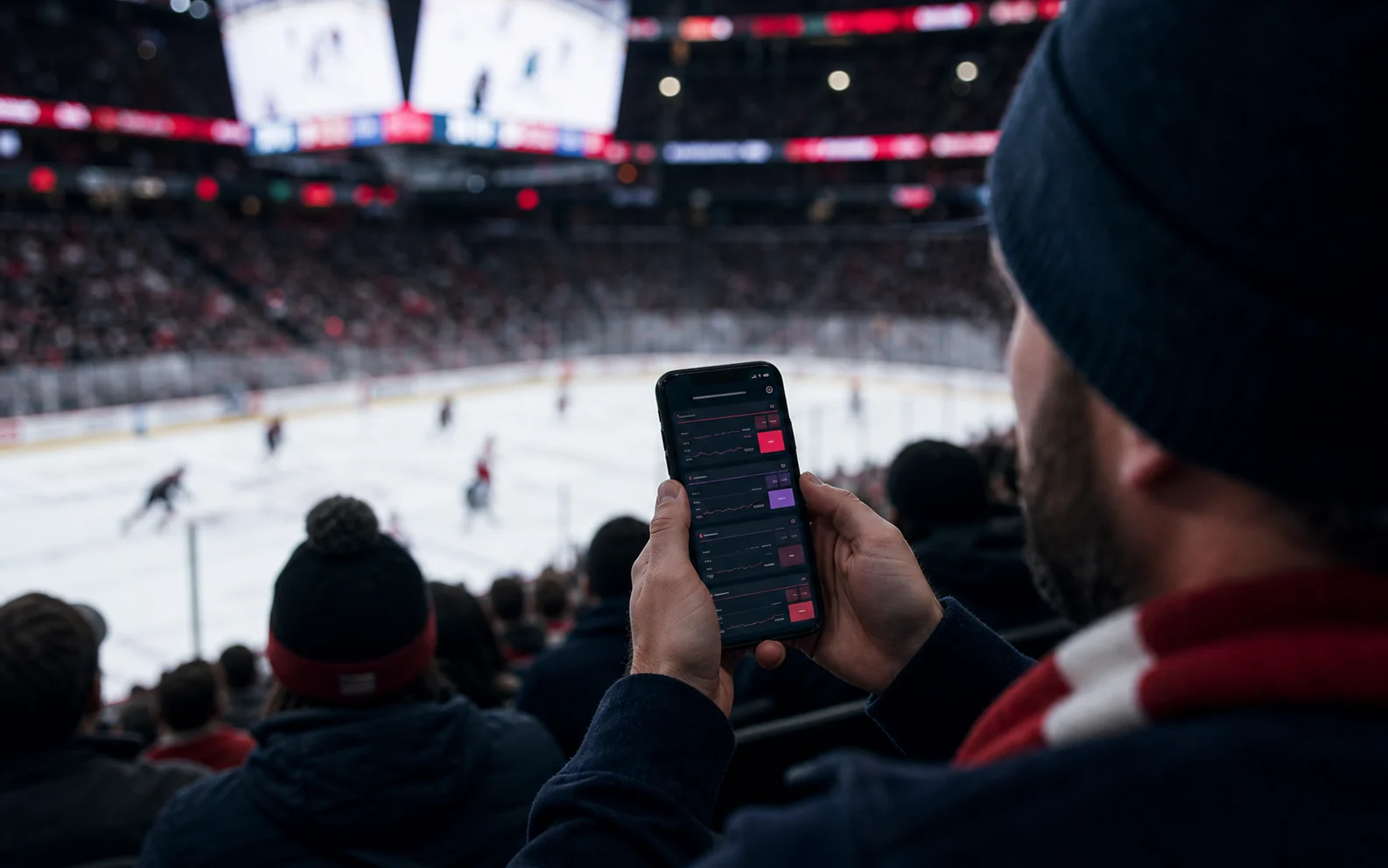
Comments gathered from regular users during testing. Lightly tidied for readability, otherwise as they were given.
"I take the hockey seriously and dabble in about six other things, and this is the first book that hasn't punished me for it. I can dig up an OHL game on a Wednesday night and it'll have actual markets. The book I was with before gave you a moneyline and thought it was doing you a favour." — Ryan, follows the NHL and a bit of junior hockey
"The Tuesday cashback is why I'm still here once the sign-up stuff dried up. It's never much, but it's real money with no strings, and it lands whether I've had a blinder of a week or a shocker. Usually a shocker." — Dave, sports bettor
"First week I was completely at sea, there's that much crammed onto every screen. Wouldn't swap it back now, though — I've got the Leafs, a Raptors game and a Dota match all in front of me without touching a menu, and once you're used to that, going back feels blind." — Steph, in-play bettor
"Autosale's bailed me out twice. You set your number and forget it's even on, and it cashes out while you're off doing something else. Second time it fired I was flat out asleep — woke up and the money was just sitting in the account." — Marc, multi player
"Didn't expect much from the esports and got a lot. Every site does Counter-Strike and Dota. Seeing Honor of Kings and Mobile Legends actually priced up, with map and round markets and not just a winner line, was a proper surprise." — Kyle, esports bettor
"Bit of advice for anyone signing up: finish every field on your profile before you put a cent in. I didn't, and my first bonus just never turned up. Nothing wrong with the site, all on me, but nobody tells you first." — Priya, weekend bettor
Where BetLabel lands for Canada

This is a book for the sort of person whose interest in sport doesn't clock off at five — which, in a country that follows seven NHL clubs across four time zones and adopts one baseball team and one basketball team as its own, is a fair chunk of us. It prices the marquee leagues properly and then just keeps going: the minor leagues, the overnight games, the sports most international operators can't be bothered listing — curling and junior hockey among them — and an esports section that runs well past the usual four titles into games barely anyone in the West bothers to price. The Tuesday cashback, with nothing riding on it, beats what most books put up. And the cash-out tools — autosale in particular — are the kind of thing you quit noticing precisely because they do their job.
Now the catches, because they're real and you deserve to hear them from me rather than find them yourself. The interface wants patience early and won't please anyone after a tidy five-market front page — those opening ten minutes are a lot, twenty-odd market columns strung across one row and half a dozen sports on screen together. The live picture is a simulation, not a broadcast, which is handy but isn't the same thing. And the bonus rules are firm about finished profiles and verified phone numbers in a way that trips up anyone who didn't read that far down. None of it is a deal-breaker. All of it is better known going in than found out later.
Here's the thing about all that clutter, though, and it's where I'll leave it. The very screen that swamps you on day one is the same screen that, by the fifth visit, lets you keep a hockey game, a Blue Jays inning and an esports match all in your eyeline without opening a single menu. You can't run a board this big from behind three neat drop-downs. It doesn't win you over at first glance. It's the slow-burn kind, and for the right bettor it burns fairly bright.
So — is it worth it? If you bet with any sort of regularity across more than one sport, comfortably yes, and few books are built for that habit as deliberately as this one is. If you're strictly a big-day bettor — the Grey Cup, a Leafs playoff run, the World Series — the mobile site on its own has you covered and you can happily ignore two-thirds of what's on offer. Either way, and this is the bit with no sell attached to it, set your deposit and time limits in your first session rather than your fiftieth. The platform is built to keep pace with you. Just make sure you're keeping pace with yourself.
Responsible gaming
A board this size makes it easy to lose your grip on both the time and the balance, and the in-play tab is where that slips away quickest — it all moves at pace and there's forever one more market sitting a tap away. Buying a slip at the corner store, marking your picks and heading back out had a natural stopping point baked right into it. A book that never shuts its doors has no such thing, so the stopping point has to be one you build for yourself. Set your deposit and session limits at the outset, not at the moment you first start to wonder whether you should have. The limits, the cooling-off periods and the self-exclusion tools all live in account settings and work the same way on whatever screen you're holding.
Betting is entertainment, and entertainment costs money. It isn't a paycheque, and going after what you've already lost is the shortest route there is from a rough night to a genuine problem. Nineteen and up across most of the country, eighteen in Alberta, Manitoba and Québec. And if the betting has stopped being any good for you — for you, or for someone close to you — help is there in every province, free, confidential, and with nothing owed for it.